>
>
From Flagship to Fire Sale: The Deliberate Dismantling of Gul Ahmed and the Signal It Sends to the World
From Flagship to Fire Sale: The Deliberate Dismantling of Gul Ahmed and the Signal It Sends to the World
The escalation from strategic downsizing to the mass termination of over 10,000 employees and the liquidation of core assets marks a decisive shift, Gul Ahmed is no longer restructuring for the future, but dismantling its legacy piece by piece.

Ava Mitchell
Jan 12, 2026
This Is No Longer Restructuring What is unfolding at Gul Ahmed Textile Mills is not a restructuring. It is not optimization. It is not a temporary correction to market conditions.
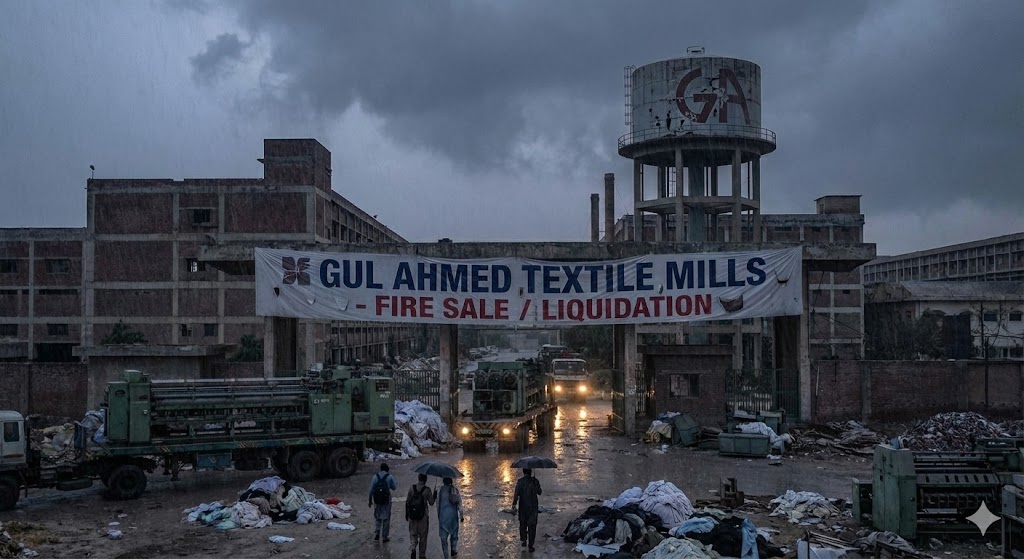
It is a systematic liquidation of an industrial institution, executed under the language of strategy but carried out with the finality of retreat.
The escalation from a planned reduction of 2,500 jobs to the mass termination of over 10,000 employees, coupled with the sale and shutdown of core manufacturing assets, marks a decisive turning point. The narrative has crossed a line — from strategic downsizing into controlled collapse.
Once regarded as the backbone of Pakistan’s textile exports, Gul Ahmed now appears to be actively dismantling itself, piece by piece, at a pace that alarms workers, suppliers, buyers, and global observers alike.
The Numbers That Confirm a Systemic Retreat
The scale and speed of recent decisions leave little room for charitable interpretation. The data points to a total withdrawal rather than a pivot:
1. Workforce Destruction
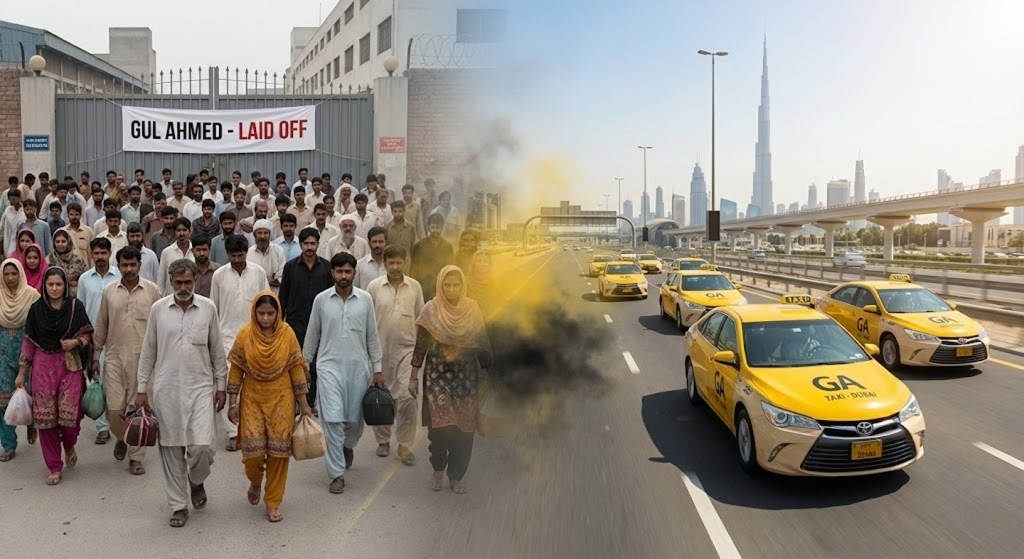
10,000 employees terminated, many with minimal notice.
Entire operational teams dissolved, not restructured or reassigned.
Institutional knowledge accumulated over decades erased in weeks.
This is not cost control — it is organizational amputation.
2. Export Collapse
A reported 50% reduction in export activity.
Retreat from long-standing international commitments.
Voluntary surrender of shelf space and buyer confidence built over generations.
For a company once synonymous with Pakistan’s foreign exchange inflows, this is an abdication of global relevance.
3. Industrial Decommissioning
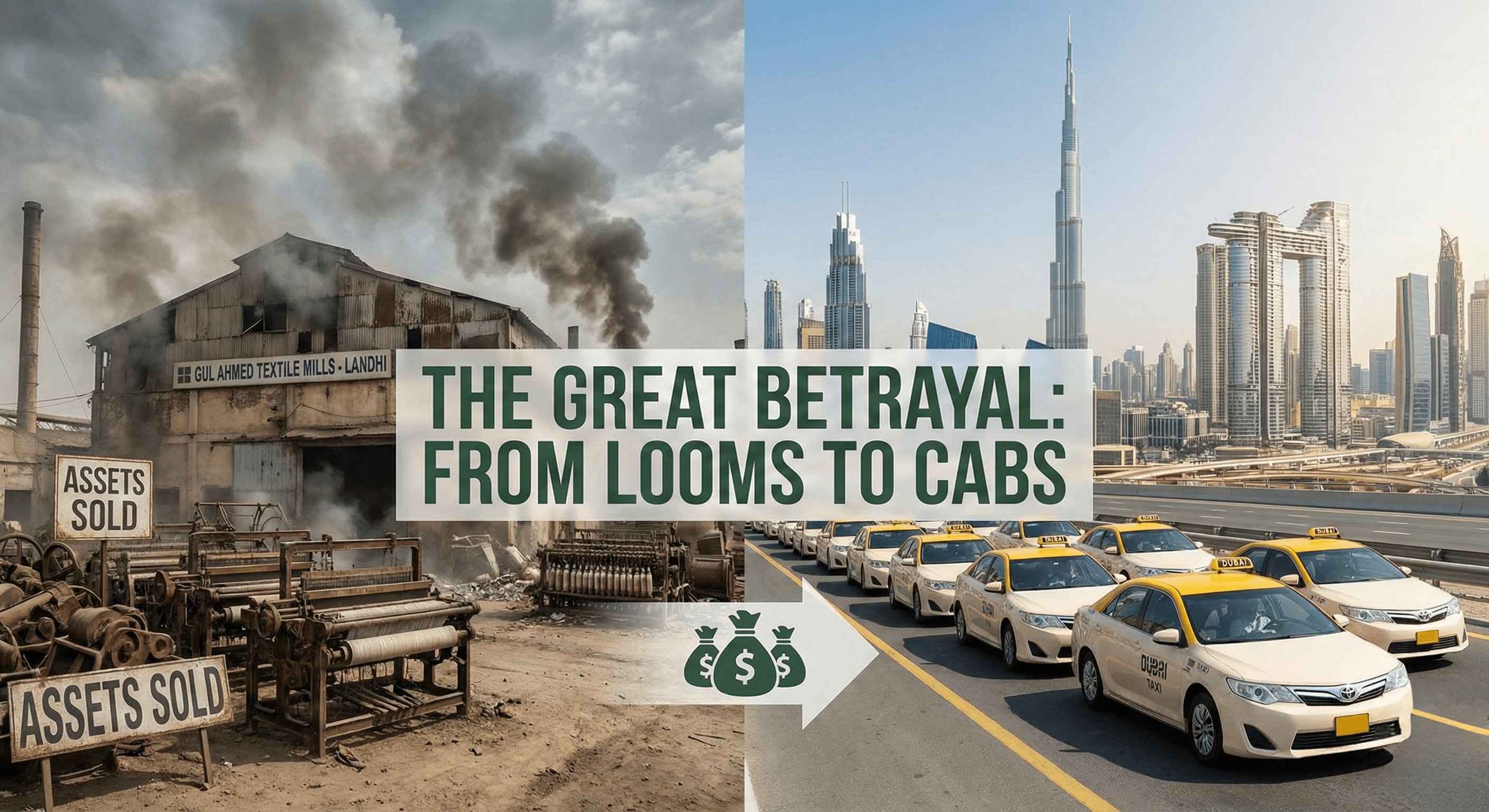
Two major spinning units shut down.
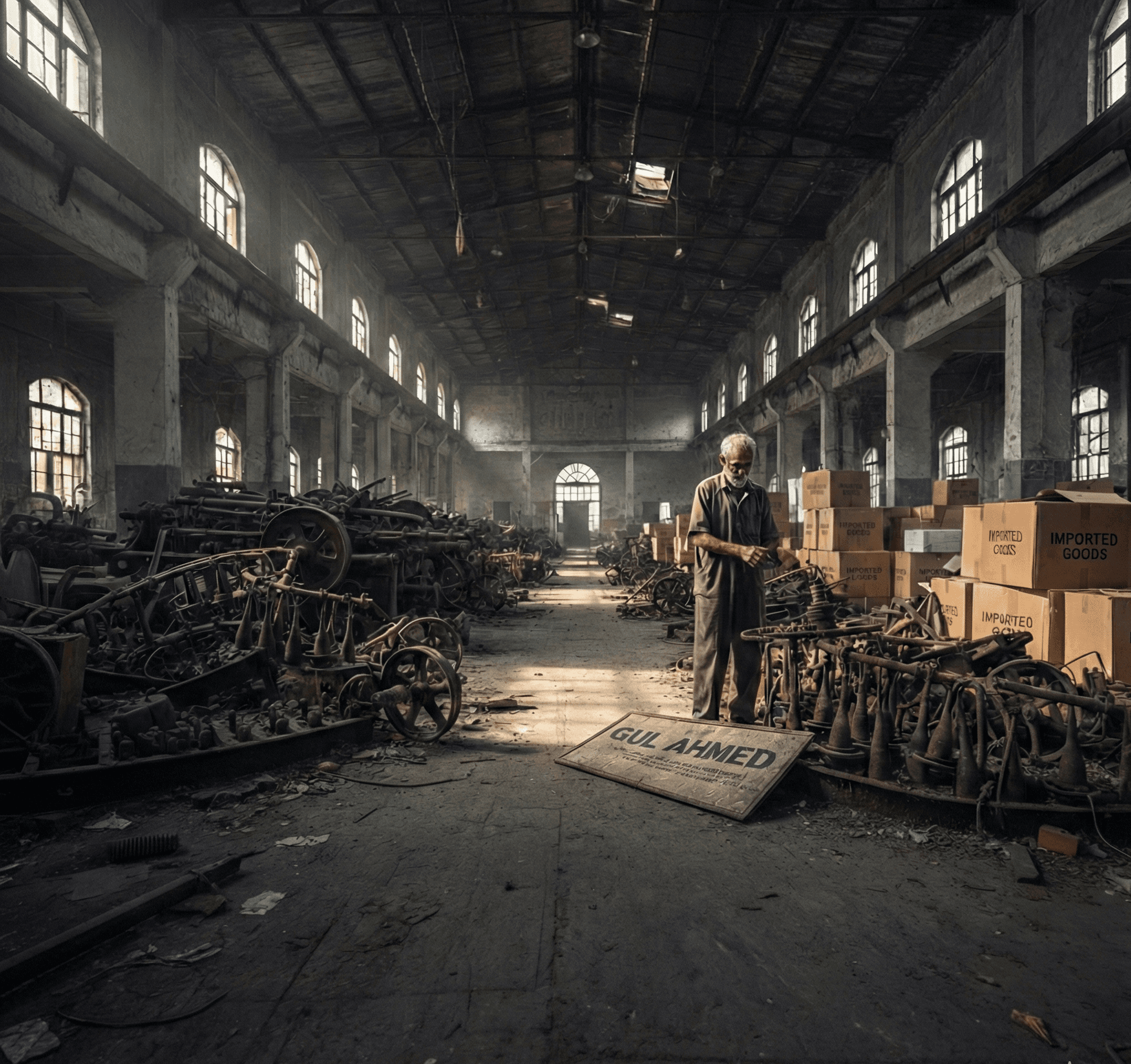
Entire weaving department sold off — not mothballed, not paused, but liquidated.
Core vertical integration — once Gul Ahmed’s competitive moat — deliberately dismantled.
When a vertically integrated textile giant sells its own production backbone, it is no longer planning for recovery. It is cashing out.
Self-Sabotage Before Heimtextil 2026
Perhaps the most baffling element of this collapse is its timing. With Heimtextil 2026 — the world’s most influential home textile trade fair — only weeks away, Gul Ahmed has chosen this exact moment to:
Lay off marketing teams.
Cut international sales staff.
Reduce export-facing operations.
These are not peripheral roles. These are the frontline representatives who convert factory capacity into global contracts.
The result is absurdity bordering on negligence: Gul Ahmed is preparing to appear — if at all — at the world’s biggest textile stage without the people capable of selling anything. Competitors will arrive with innovation, scale, and confidence. Gul Ahmed arrives with silence, uncertainty, and a shrinking footprint.
The Human Cost: Collateral Damage at Industrial Scale
Behind every spreadsheet decision are real households, and in this case, tens of thousands of them.
Families stripped of income overnight.
Communities built around mills hollowed out.
Remaining employees operating under fear, distrust, and paralysis.
This is not merely a labor issue. It is a social shockwave. The workers who helped establish Gul Ahmed’s global reputation are being discarded as liabilities, not acknowledged as assets — a move that permanently damages trust within the organization and beyond it.
A National Reputation at Risk
Gul Ahmed is not just another private company. It is — or was — a symbol of Pakistan’s industrial capability. Its unraveling is already being misread internationally as evidence that:
Pakistan’s textile sector is failing.
Manufacturing is collapsing.
Long-term supply reliability is in question.
The Reality Check This conclusion is wrong, but perception often matters more than truth. Pakistan’s broader textile industry remains resilient, diversified, and competitive. Many manufacturers are expanding capacity, upgrading technology, and securing long-term global contracts.
The tragedy is that one giant’s self-inflicted collapse risks redefining the narrative for an entire nation. When a flagship burns, outsiders assume the fleet is sinking.
Conclusion: A Legacy Being Liquidated
Gul Ahmed’s current trajectory does not resemble a company preparing for reinvention. It resembles one harvesting its own remains. What is being lost is not just capacity or headcount, but credibility, continuity, and confidence.
History will not remember this phase as a difficult adjustment. It will remember it as the moment a legacy was voluntarily dismantled, decision by decision.
And the most damning question remains unanswered: If this is strategy — what exactly is the endgame?
About

Delivering independent journalism, thought-provoking insights, and trustworthy reporting to keep you informed, inspired, and engaged with the world every day.
Featured Posts
Explore Topics